Artikel

Wissen rund um Neurodivergenz und Pädagogik – alle Artikel für Fachkräfte und Eltern

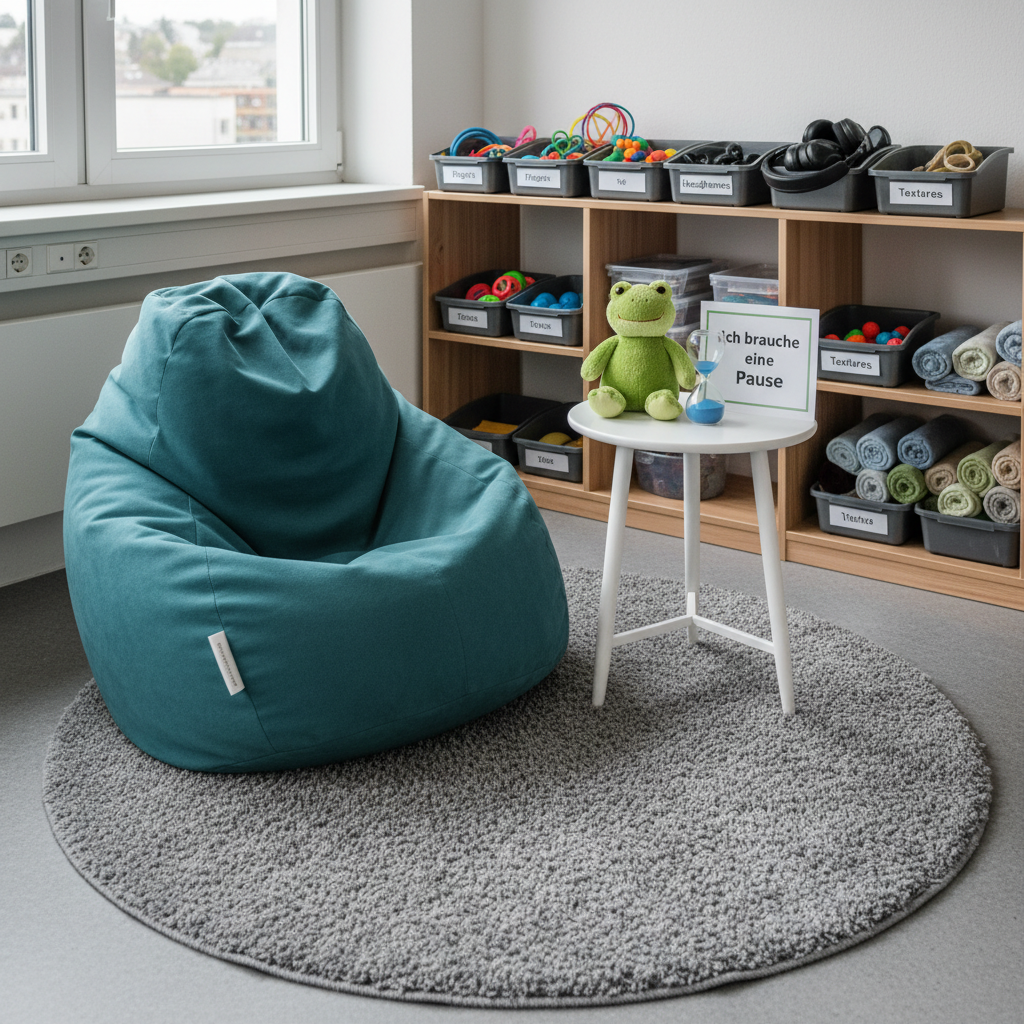
A sensory-aware classroom corner designed for regulation, with a low, soft beanbag chair in calming teal, a textured grey rug, and a small white side table holding a green frog plush, a sand timer, and a laminated “Ich brauche eine Pause” card. Nearby shelves hold neatly labeled bins of fidget tools, noise-cancelling headphones, and textured fabric swatches in muted tones. Natural overcast light falls gently from a high window, creating an even, soothing illumination. Photographic realism, wide-angle view with clear focus throughout, composed using the rule of thirds to emphasize the break area. The mood is safe, understanding, and respectfully clinical, ideal for illustrating supportive pedagogical strategies for neurodivergent children, with no people in the scene.

Suche

Finde gezielt die Beiträge, die zu deiner aktuellen Frage passen – filtere nach Thema, Alter der Kinder oder Perspektive, ob du als Fachkraft oder als Elternteil suchst.

Beiträge jetzt gezielt filtern

← Zurück

Vielen Dank für deine Antwort. ✨

A clean whiteboard in a training room, covered with carefully drawn diagrams about Neurodivergenz: overlapping circles labeled “Umwelt,” “Nervensystem,” and “Erwartungen,” a simple brain sketch with highlighted sensory areas, and bullet points summarizing “Kinder tun gut, wenn sie können.” On the tray rests an orderly row of color-coded markers and a small green frog magnet holding a printed quote about understanding behavior. The room is lit by soft, indirect ceiling lights and a hint of daylight from a side window, creating a neutral, professional ambiance. Photographic realism, shot from a slight side angle to show depth, with sharp focus on the diagrams and frog magnet while the neutral walls and empty chairs fall into a gentle blur, emphasizing reflective learning without depicting any people.